.svg)
The 8-Unit Blueprint: How Bill 23 Made This Old Ottawa East Conversion Possible
There's a quiet residential street in Old Ottawa East (near University of Ottawa) where something remarkable happened over the past year.
If you drove by the property twelve months ago, you would have seen an aging duplex—the kind that's been on the same lot since the 1960s, with fading paint, dated windows, and a layout that hadn't changed in decades. The two units inside were renting for a combined $3,600 per month. Decent income for a landlord, but nothing extraordinary.
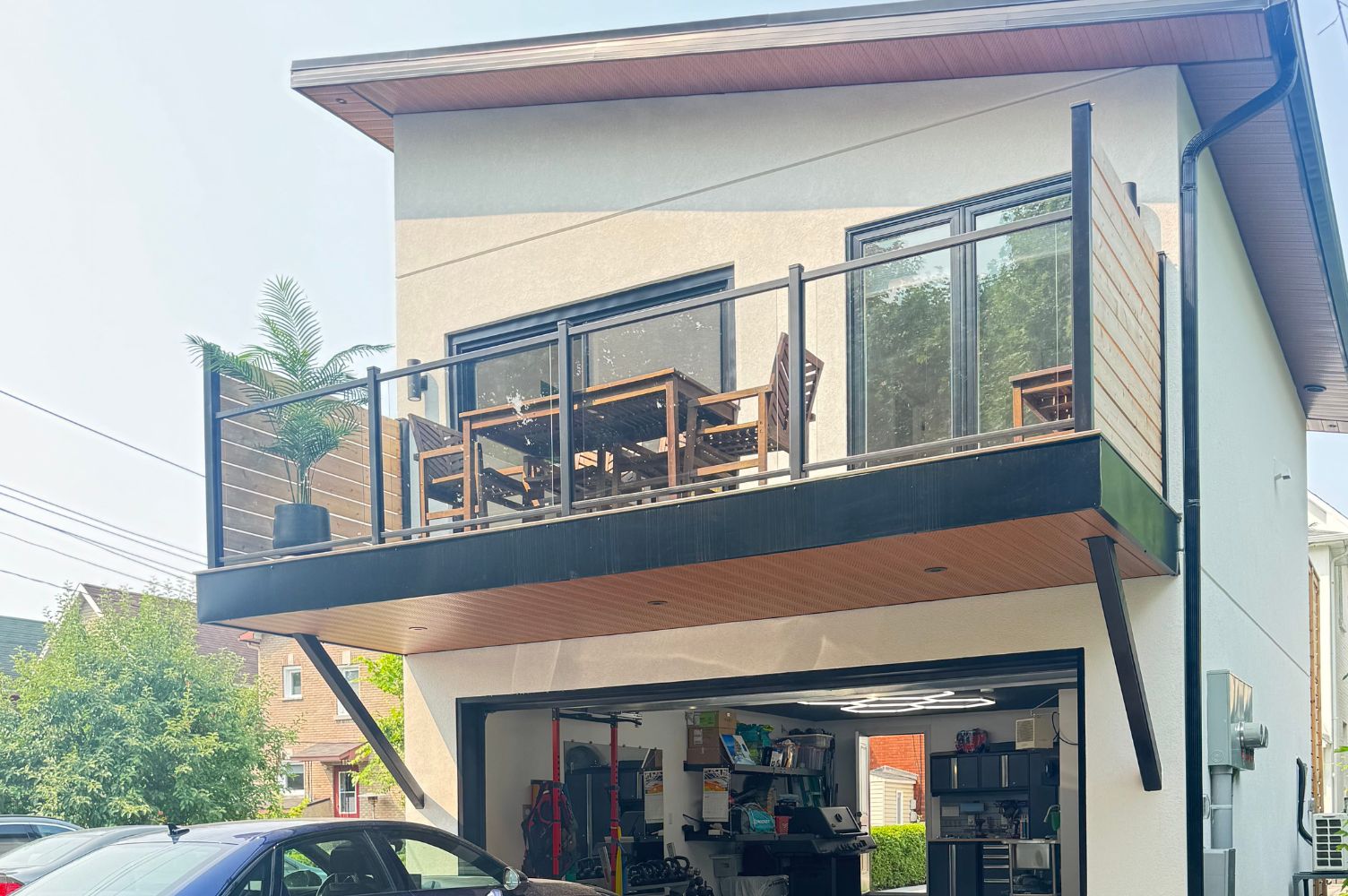
If you drive by that same property today, you'll see a modern three-storey building with eight self-contained apartments. The monthly rental income? $16,800. That's not a typo. The same piece of land is now generating nearly five times the income.
This transformation wasn't the result of some creative loophole or aggressive rezoning battle. It happened because Ontario's Bill 23 and Ottawa's New Official Plan fundamentally changed what's possible on residential lots across the city.
And most property owners still don't realize it.
What We Saw That Others Didn't
When this property came on the market for $800,000, most buyers saw a duplex. They calculated the numbers based on what was already there: two units, $3,600 per month in rent, and the standard metrics you'd use to evaluate any small rental property.
But we looked at something different. We looked at the lot itself.
It was a 40-foot by 125-foot lot in an N4 zone on a minor corridor. Under the old rules, that would have meant years of rezoning applications, community consultations, and expensive variances just to add a few units. Most investors wouldn't even bother.
Under the new rules? That lot could legally support eight units without any rezoning, without site plan control, and without the bureaucratic nightmare that used to kill these projects before they started.
The property wasn't worth $800,000 because of what was on it. It was worth far more because of what could be built on it.
How to Build 8 Units with No Rezoning Needed
Here's what made this project possible: Bill 23 eliminated site plan control for projects under ten units. That might sound like technical jargon, but let me explain what it actually means.
Site plan control used to add $100,000 to $250,000 in consulting fees and 12 to 36 months to your timeline. You'd hire engineers, traffic consultants, and landscape architects to produce reports that the city would review for months. Then you'd go back and forth with revisions. It was expensive, slow, and unpredictable.
Now? For an eight-unit building, you skip all of that. You still need a building permit—which ensures the building is safe and meets code—but you're not stuck in a multi-year approval process.
We designed a three-storey building with eight units ranging from 550 to 750 square feet. Four one-bedroom units and four two-bedroom units. Each unit has its own full kitchen, bathroom, living space, and bedroom. These aren't cheap rentals stuffed into a house. They're well-designed, modern apartments that people actually want to live in.
The finishes are what you'd expect in a new condo: quartz countertops, stainless steel appliances, luxury vinyl plank flooring, contemporary fixtures. We're not building to the bottom of the market. We're building quality housing that commands premium rents and attracts long-term tenants.
Let’s Breakdown the Timeline
Permitting took four months. Construction took eight months.
Twelve months from purchase to tenants moving in.
Compare that to the old world where you'd spend a year just getting approvals, and you can see why Bill 23 is a game-changer for small-scale developers.
The construction itself was straightforward because we've done this before. We know the building code requirements. We know how to design for efficiency. We know which subcontractors can deliver quality work on schedule. When you're a design-build firm that specializes in multi-unit projects, you're not figuring things out as you go—you're executing a system you've refined over dozens of projects.
The city inspectors came at the required stages. Everything passed. No surprises, no drama.
The Financing Breakthrough that CMHC MLI Select Offers
Here's where things get really interesting.
When the building was complete and tenanted, we refinanced through CMHC's MLI Select program. This is a financing option that most small-scale investors have never heard of, but it's one of the most powerful tools available right now.
CMHC MLI Select gave us 90% financing with a 45-year amortization.
Let me put that in context. If you walked into a traditional bank and asked for a loan on an eight-unit building, you'd typically get 75% financing at best, a 25-year amortization, and commercial rates that are 2-3% higher than residential mortgages.
With MLI Select, we put down 10% and stretched the payments over 45 years. That dramatically improved our cash flow. Instead of a hefty mortgage payment eating into our rental income, we're paying a fraction of that.
The program exists because the federal government wants to encourage purpose-built rental housing. They're making the math work for developers who are willing to build and hold rental properties instead of flipping them.
The Numbers: What It All Means
So here's where we landed:
The property was purchased for $800,000. The conversion—demolition, construction, permits, finishes, everything—cost $1.8 million. Total all-in: $2.6 million.
When the building was completed, it appraised for $3 million. That means we created $400,000 in equity before collecting a single month's rent.
But the real story is the cash flow.
The old duplex generated $3,600 per month. The new building generates $16,800 per month—four one-bedroom units at $1,900 each and four two-bedroom units at $2,300 each. That's just over $200,000 per year in rental income.
After operating expenses—property taxes, insurance, maintenance, reserves—and after the mortgage payment (remember, 90% financed at 45 years), this property generates over $45,000 per year in positive cash flow.
That's money in the bank, every year, from one property.
Why This Matters Beyond One Project
This isn't just a success story about one building in Old Ottawa East. It's a blueprint for what's now possible across the city.
There are hundreds—maybe thousands—of properties in Ottawa that are currently zoned for much higher density than what's built on them. Single-family homes on 40-foot lots that could support four units. Duplexes that could become six-plexes. Small apartment buildings that could be rebuilt as larger ones.
Most of these properties are still priced based on what's currently there, not what they could become. That's the opportunity.
The investors who understand the new zoning rules, who know how to navigate the streamlined approval process, and who have access to programs like CMHC MLI Select are the ones building serious wealth right now.
Everyone else is still playing by the old rules.
Here’s How You Can Take Advantage Of the Opportunity
If you own property in Ottawa—particularly in the inner urban neighborhoods—you need to understand that your property might be worth significantly more than you think.
Not because of the building that's on it, but because of what could be built on it.
If you're an investor looking at the Ottawa market, you need to stop evaluating properties based on their current income and start evaluating them based on their development potential.
And if you're wondering whether a project like this is something you could actually pull off, the answer is probably yes—if you're willing to learn the new rules and work with people who've done it before.
The Old Ottawa East project we just completed started with a conversation. An investor called us, told us about a property they were looking at, and asked what was possible. We pulled the zoning, ran the numbers, and showed them the opportunity.
Twelve months later, they own a $3M building generating over $200,000 a year in rental income.
That's the blueprint. It's repeatable. And the opportunity is still wide open.
Book a call with us today to discuss your property
.jpeg)
.jpg)