.svg)
Can I Add a Secondary Suite to My House in Ottawa?
Yes. For most detached, semi-detached, linked-detached, townhouse and duplex homes in Ottawa, you can add a secondary suite without applying for a rezoning. Provincial law guarantees a baseline, and Ottawa's zoning permits these units across the urban, suburban and rural areas.
Whether you can add one on your property comes down to four gates: zoning permission, servicing capacity, Building Code feasibility and permits. Most projects that fail, fail on the third gate, not the first. This guide covers all four.
Gate 1: Does Your Zoning Permit a Second Unit?
Almost certainly yes. Section 35.1 of the Ontario Planning Act requires municipalities to permit up to three residential units as-of-right on most serviced residential lots. Ottawa implements this through Section 133 of Zoning By-law 2008-250 and, in the new by-law, through the Neighbourhood zone provisions and Section 146 (Dwelling Equivalency).
One thing catches homeowners off guard in 2026: Ottawa has two zoning by-laws in effect at the same time. Council enacted Zoning By-law 2026-50 on March 11, 2026. Twenty-five appeals were filed, and on July 2, 2026 the Ontario Land Tribunal ordered the unappealed portions into force retroactive to March 11. The City's instruction for anyone applying today is direct: building permit applications deemed complete on or after March 11, 2026 must comply with both Zoning By-law 2008-250 and Zoning By-law 2026-50, with the most restrictive provision of the two applying.
In practice that means you should design to the tighter of the two rulebooks. To confirm what applies to your address, see whether your property is zoned for a secondary unit and how to check your new zoning classification.
Which house types qualify
Under Section 133, additional dwelling units and coach houses are permitted on a lot containing a detached dwelling, linked-detached dwelling, semi-detached dwelling, townhouse dwelling or duplex dwelling. If your home is one of those five types, the use is permitted.
Gate 2: How Is Your Lot Serviced?
Servicing sets your unit ceiling, and it is the single biggest split in Ottawa's rules.
- Municipal water and wastewater: the City's guidance allows up to two additional dwellings, so three units total. That can be two apartments inside the principal building, or one apartment plus one coach house on the same lot.
- Private services (well or septic): you are limited to one additional dwelling or one coach house, so two units total. You also need to confirm the existing septic system can carry the extra load, which is handled through the Ottawa Septic System Office.
For a fuller breakdown of the numbers, including how the new by-law's four-unit provision interacts with the appeals, read how many dwelling units you can have on your lot in Ottawa.
Gate 3: Will the Ontario Building Code Allow It? (The Real Test)
Zoning tells you whether a suite is permitted. The Building Code tells you whether your basement, attic or spare floor can physically become one. This is where projects get killed, and it is worth checking before you spend money on drawings.
If your house is more than five years old, it is treated as an existing house and you get more flexibility. The three items to measure first:
- Ceiling height. A basement second unit needs 1.95 m (6 feet 4¾ inches) over the entire required floor area, including the route inside the unit leading to the exit. An attic unit needs at least 50 per cent of the required floor area at 2.03 m (6 feet 8 inches), and space under 1.4 m does not count at all.
- An escape window. A basement or ground floor means-of-escape window needs an unobstructed opening of at least 0.38 m² (4.1 ft²), with no dimension less than 460 mm, and the opening no more than 900 mm above the floor.
- Fire separation. You need a 30-minute fire separation between units and between units and common areas. That drops to 15 minutes if the entire house has interconnected smoke alarms.
If your basement is 6 feet 2 inches from slab to joist, you are looking at underpinning or lowering the floor before anything else happens, and that changes the budget category entirely. Measure first. See the full basement apartment requirements for the rest of the list.
Gate 4: Permits
You need a building permit. This is not optional, and it applies even when very little construction is proposed. The City is explicit that a proposed change of use must be reviewed for compliance with the Building Code and other applicable law, so an existing unfinished basement being converted still triggers a permit.
You will also need a separate electrical permit through the Electrical Safety Authority, and plumbing and mechanical work carries its own review. Ottawa's approved service level targets a first review within 15 business days.
One rule that catches people: if you are adding two additional dwelling units inside the principal building, the person taking design responsibility must be registered under a Building Code Identification Number (BCIN). A homeowner may take design responsibility for one additional dwelling unit where no other exists, or for a coach house, but not for a two-unit build. Details in our guide to building permits for secondary dwelling units and how to get a building permit in Ottawa.
Where in the House Should the Suite Go?
The Building Code lets you put a second unit in any part of your house, on one floor or several. In Ottawa, four locations do most of the work:
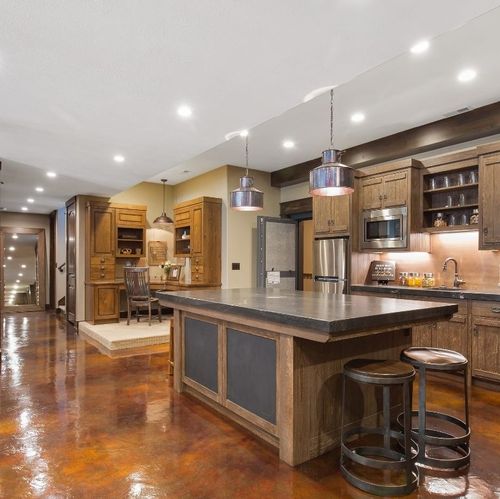
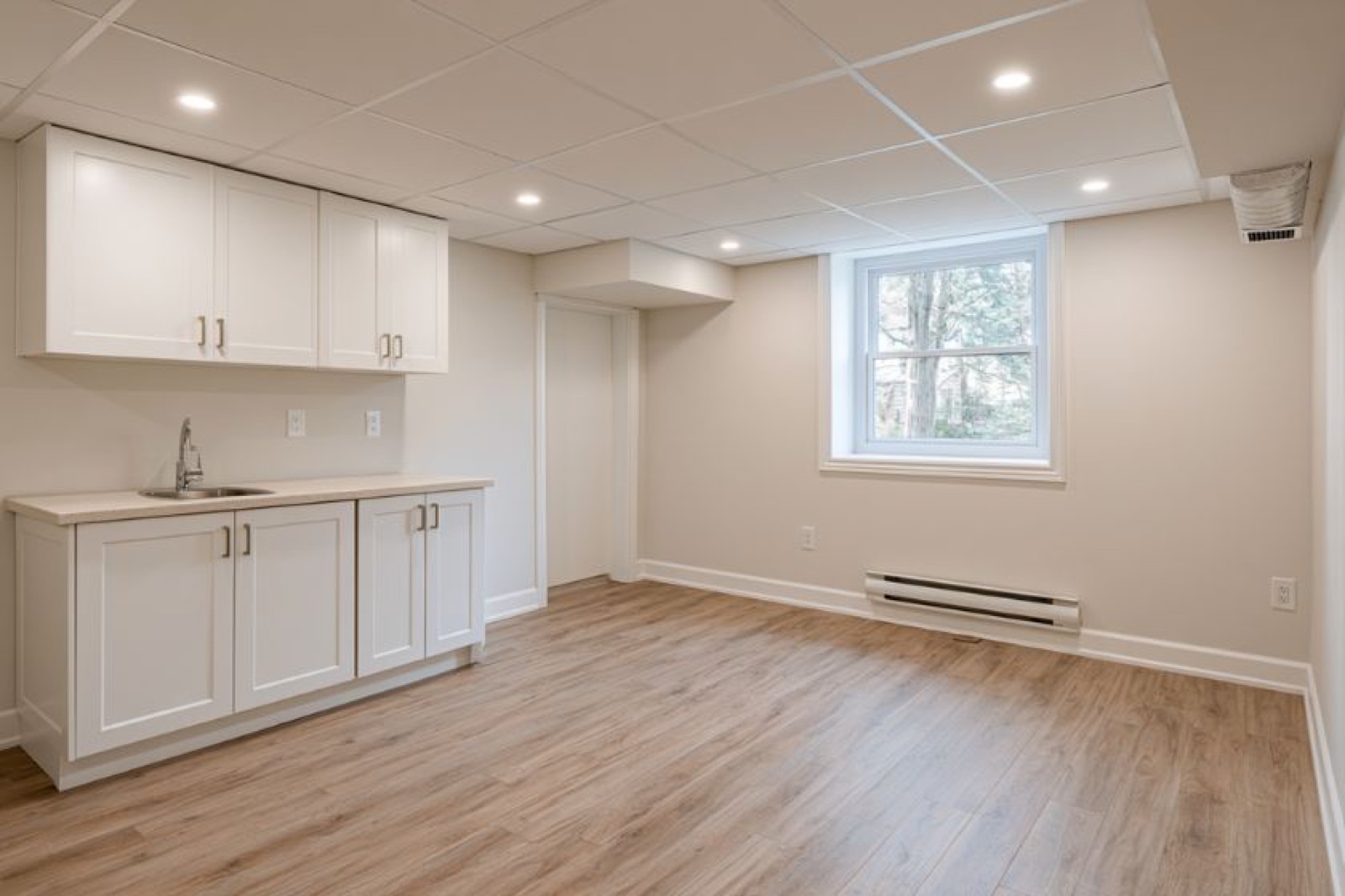
- Basement. The most common choice, and the one most sensitive to ceiling height. See our basement suite and walk-out apartment services.
- Attic or top floor. Sloped ceilings are workable under the 50 per cent rule, and the escape window requirements are easier to hit than in a basement.
- Attached garage. A garage conversion avoids the excavation problem entirely, though you give up the parking bay.
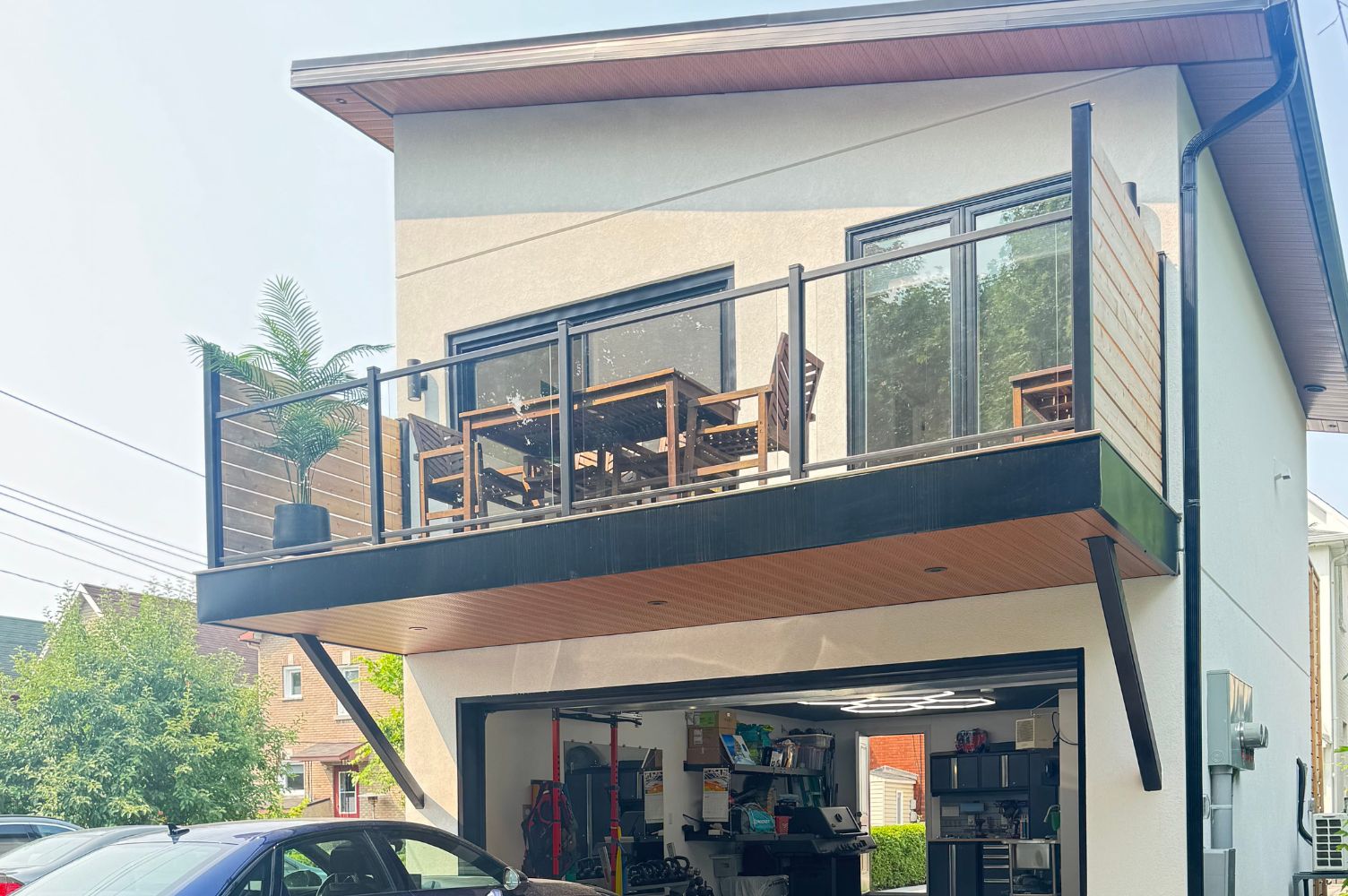
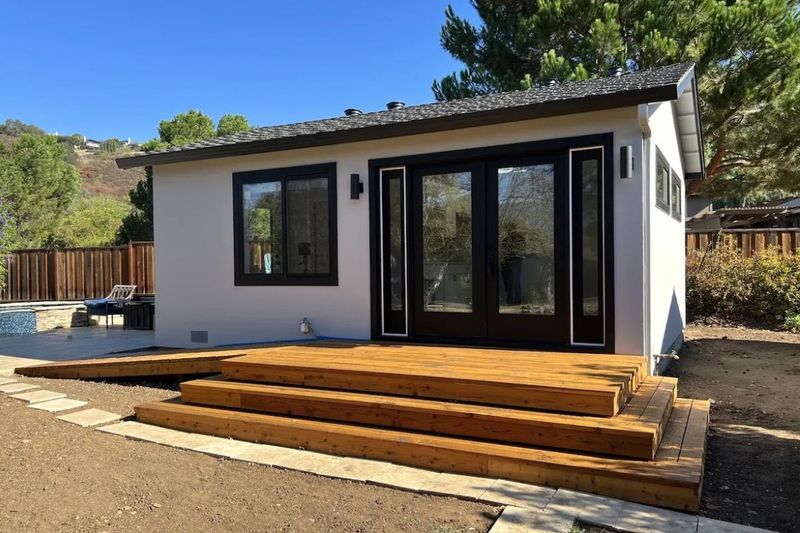
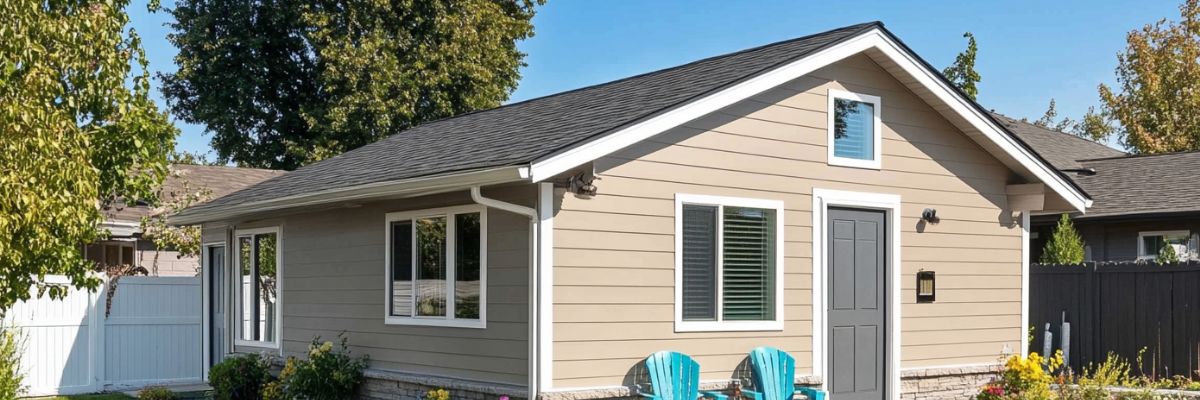
- A separate building. A coach house is treated as an additional dwelling unit too, but it is governed by its own setback, height and footprint rules.
What About Cost and Return?
A basement suite conversion with a bathroom, kitchen and separate entrance typically runs meaningfully above a straight basement finish because of the plumbing, egress and fire separation work. Our basement renovation cost guide and ADU cost guide break down the ranges, or run the numbers yourself with the ADU cost calculator.
On the financing side, the Canada Secondary Suite Loan Program is worth reviewing before you commit. Under provincial Bill 23 rules, additional residential units added to an existing home are generally exempt from development charges, which removes what used to be the largest single line item.
Two Things That Can Still Stop You
- Site-specific zoning. Exceptions, overlays and heritage designations can override the general permissions. A property in a flood plain overlay or a heritage conservation district has extra steps.
- Pre-2005 units. Secondary dwelling units were permitted before 2005 in the former municipalities of Cumberland-Urban, Gloucester, Nepean-Urban, Osgoode, Goulbourn and West Carleton. Units that existed before 2005 in those areas still have to comply with the Ontario Building Code and Fire Code, so an inherited suite is not automatically legal.
Your Next Step
Before you hire anyone, do three things: look up your zone on GeoOttawa, measure your basement ceiling height from finished floor to the underside of the joists, and confirm whether you are on municipal services or a septic system. Those three answers determine roughly 90 per cent of what is possible.
If you want a second opinion, a Development Information Officer at the City can be reached at 613-580-2424 extension 23434 or dioinquiry@ottawa.ca, with a response in two to three business days.
Related Reading
- Where are SDUs allowed in Ottawa?
- What zoning allows basement apartments in Ottawa?
- Do I need a separate entrance for a basement suite?
- Do I need parking for a secondary unit?
- ADUs vs SDUs in Ottawa
Build a Legal Income Suite in Ottawa
Ottawa General Contractors designs and builds legal secondary suites, and we handle zoning review, permits and inspections as part of the job. See our income suite contractor services, or get a free quote and we will tell you what your property can actually support before you spend a dollar on drawings.

.jpeg)